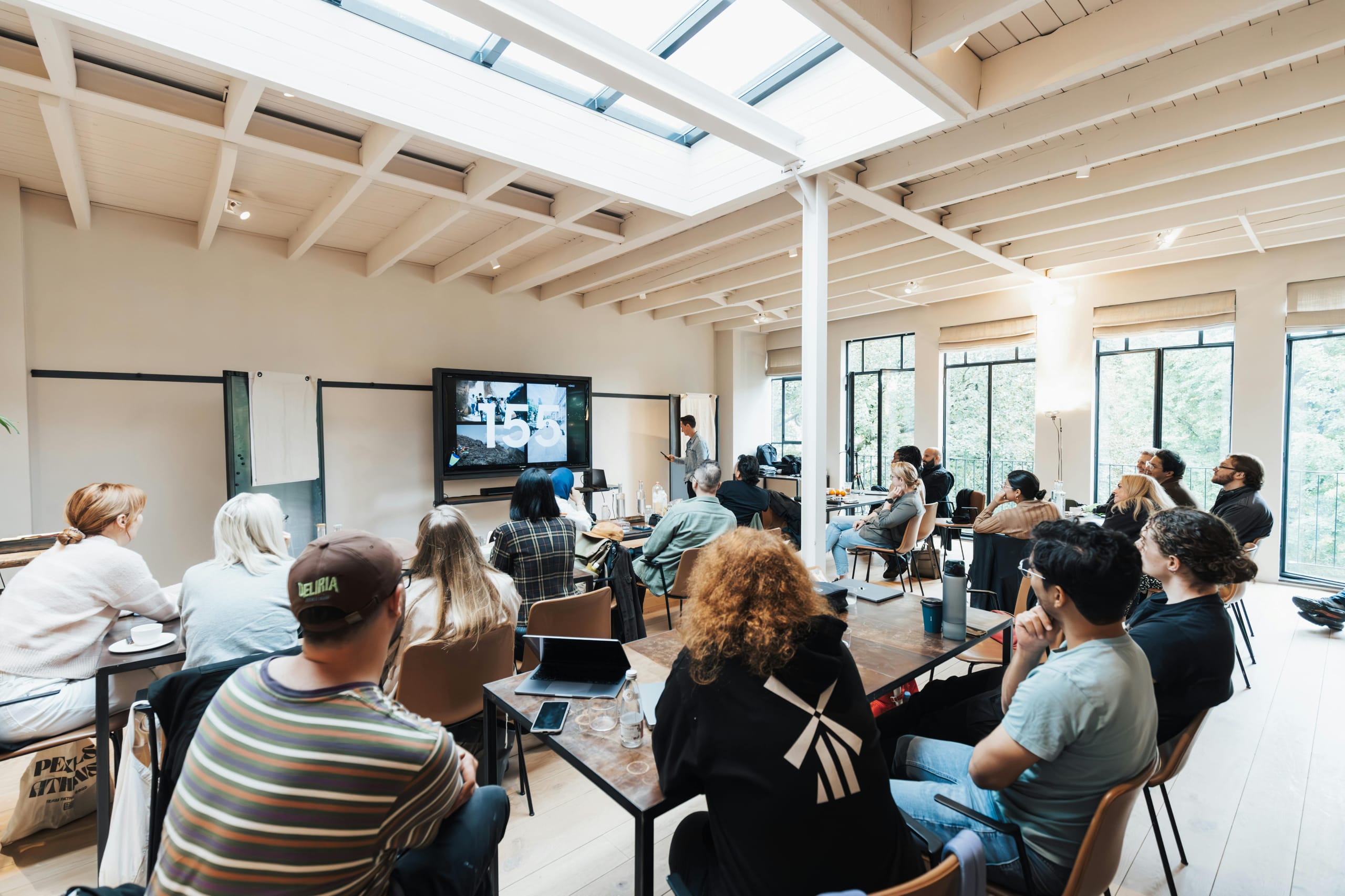
CAPACITY BUILDING & TRAINING
Sustainability literacy across an organization — from procurement and finance to operations and HR — has become a prerequisite for credible ESG performance, supply chain compliance, and regulatory readiness. CSRD requires organizations to collect sustainability data from business units that have never tracked it before. CBAM requires operations and procurement teams to understand carbon embedded in purchased materials. EcoVadis assessments draw from evidence that HR, legal, and supply chain teams must understand and document. The gap between a sustainability team that owns these requirements and an organization where every workstream feeds into them is, almost entirely, a training gap.
Semtrio designs and delivers customized sustainability training programs that build working knowledge of material frameworks, reporting obligations, and corporate sustainability practice — tailored to the functions, seniority levels, and regulatory context relevant to the organization. Our programs are written and delivered by the same practitioners who run live advisory engagements — which means the training reflects current methodology, actual implementation experience, and the specific challenges that organizations at each stage of the ESG journey face.
Regulatory and rating frameworks increasingly require data and documentation from functions that have not historically engaged with sustainability: operations teams tracking energy and waste data for CSRD E1 and E2, procurement teams identifying CBAM-covered materials and carbon content, HR teams documenting worker wellbeing metrics for EcoVadis and CSRD S1. Sustainability teams cannot collect, validate, and disclose this data alone — the rest of the organization must understand what is required and why.
An organization whose sustainability function relies on external consultants for every data collection cycle, questionnaire preparation, and report draft cannot respond to a new regulatory requirement, an investor data request, or a buyer qualification deadline on short notice. Internal capability — teams that understand the frameworks, know what data they need to produce, and can respond to questions from auditors or investors without external support — is the resilience that reduces both cost and risk over time.
CSRD's ESRS are being updated. CBAM's methodology requirements are changing. SBTi criteria are revised. CDP questionnaires shift year on year. Organizations that trained their teams on frameworks two years ago are training them on frameworks that no longer reflect current methodology. Effective sustainability training requires not just strong foundational content but active curriculum maintenance from practitioners who are tracking these changes in real delivery.
Semtrio designs sustainability training programs as organizational capability investments — not awareness exercises. The distinction matters. An awareness exercise teaches employees that climate change is important and that the company has sustainability commitments. A capability program teaches procurement teams how to identify CBAM-relevant materials and obtain carbon content data from suppliers, teaches finance teams how financed emissions are calculated and what IFRS S2 requires them to disclose, and teaches operations teams what Scope 1 and 2 emissions are, how they are measured, and what data they need to produce for the annual GHG inventory. The outcome is an organization that contributes to sustainability performance rather than simply reporting on it.
Programs are customized for each organization — built around the specific frameworks the organization is managing, the functions that need to engage with them, the seniority levels from operational staff through to senior management, and the specific knowledge gaps that are creating the most significant bottlenecks in current sustainability delivery.
OUR PROCESS
Customized sustainability training — framework-specific, function-targeted, and delivered by practitioners who run live engagements.
Teams that complete climate and GHG training participate more effectively in the annual GHG data collection process — understanding what activity data is required, how emission factors are applied, and what constitutes audit-ready evidence. Training and GHG accounting engagements together build a data collection process that is progressively more internal and progressively less dependent on external rebuilding each cycle.
Learn moreGRI sustainability reporting requires data and documentation from multiple functions simultaneously — organizations with trained sustainability teams produce more complete, more accurate GRI data with less external support. Semtrio designs training programs that equip functions to own their contribution to the GRI reporting process rather than receiving external requests they cannot respond to without help.
Learn moreCSRD compliance requires cross-functional data ownership — operations, finance, HR, and procurement teams all contribute to ESRS data collection. Organizations that have trained these functions on ESRS requirements before the first compliance cycle engage their sustainability advisor more effectively, collect data more completely, and respond to assurance provider questions without external mediation.
Learn moreProcurement teams that understand sustainability frameworks — Scope 3 measurement, EcoVadis assessment themes, ESRS S2 supply chain requirements — design more effective supplier questionnaires, engage suppliers more credibly, and contribute directly to supply chain sustainability performance rather than acting as administrators of external programs.
Learn moreTraining written and delivered by the practitioners who run live engagements — current methodology, real implementation experience, applied context.
Semtrio's training programs are written and delivered by the same practitioners who run the advisory engagements — the consultants who complete CDP questionnaires for clients, who build CSRD data architectures, who validate GHG inventories, who conduct EcoVadis gap analyses. This is not a training division that has been briefed on what the advisory division does. It is practitioners teaching what they practice.
The practical result is training content that reflects the current state of the methodology — not a textbook version of it. When Semtrio delivers a CSRD training for a manufacturing company's procurement and operations teams, the content reflects how ESRS E1 data collection actually works in manufacturing environments, what the most common gaps are, and how auditors approach the evidence review. When we deliver a CDP training for a bank's sustainability team, the content reflects the current questionnaire structure, the scoring methodology at the question level, and what A-List responses actually look like — because we produce A-List responses in live engagements.
Across more than 2,000 projects and 10+ sectors, Semtrio has developed the applied understanding of how sustainability frameworks are experienced at the organizational level — where the data collection bottlenecks are, which functions struggle most with which requirements, and what training outcomes most directly improve delivery quality. That experience is what makes our training programs more useful than generic sustainability education.
Talk to our team about your sustainability training programWhether you're scoping a single service engagement, evaluating end-to-end advisory across multiple clusters, or looking for one accountable partner across strategy and disclosure — start here.

Yaren Ünal
Senior Specialist,Client Solutions

Hamza Söylemez
Specialist,Client Solutions
Frequently asked questions about sustainability training
Organizational sustainability training builds the working knowledge of sustainability frameworks, regulatory obligations, and corporate sustainability practice that enables business functions — not just the sustainability team — to contribute to ESG performance. The organizations that need it most are those where the sustainability team is the only function that understands what CSRD requires, what data CBAM needs from procurement, what ESRS S1 requires from HR, or what the CDP questionnaire is asking. When sustainability knowledge is confined to one team, every data collection cycle requires external mediation, every regulatory change requires external interpretation, and every auditor question requires a specialist to respond. Distributing sustainability literacy across the organization resolves this structural fragility — and reduces the per-cycle cost of sustainability delivery.
Semtrio's training programs begin with a needs assessment that maps the organization's regulatory and rating obligations against the knowledge gaps of each relevant function. Procurement teams need to understand Scope 3 Category 1 measurement, CBAM carbon content requirements, and EcoVadis sustainable procurement themes. Finance teams need to understand IFRS S2, CSRD financial materiality, and sustainability-linked finance structures. Operations teams need to understand Scope 1 and 2 measurement, water and waste data collection for ESRS E2 and E3, and energy efficiency reporting. HR teams need to understand ESRS S1 worker wellbeing metrics, diversity data requirements, and health and safety KPIs for EcoVadis. Each function receives the knowledge it needs to own its contribution — not a general overview of sustainability that is equally irrelevant to everyone.
An awareness program teaches people that sustainability matters and that the organization has commitments. A capability program teaches people what specifically they need to do differently — what data they need to collect and when, what documentation they need to maintain and in what format, what the auditor or investor will ask them and how to respond. The distinction is the difference between an employee who knows the company has science-based targets and an operations manager who knows that this means they need to track monthly energy consumption by facility, in kWh, with meter-level granularity, and that this data will feed the Scope 1 and 2 GHG inventory that the CDP questionnaire references. Capability programs produce the latter. Semtrio designs all training to the capability standard — because awareness without application does not change what the organization can do.
Sustainability frameworks evolve continuously — ESRS standards are updated, CDP questionnaires shift year on year, CBAM methodology requirements change, SBTi criteria are revised. Semtrio's training programs are maintained by the same practitioners who track these changes in live advisory engagements — which means curriculum updates reflect real methodology changes, not periodic review of published documents. We offer curriculum maintenance as a component of training programs — updating content when the frameworks covered by the program make material changes, so the organization is not training its teams on methodology that no longer applies.
Semtrio's training programs begin with a training needs assessment — mapping the organization's sustainability obligations, internal capability gaps, and the specific functions that most urgently need training. We design the training curriculum and content modules, adapting content by function and seniority level. We deliver foundation modules that build working knowledge of the relevant frameworks and the organizational sustainability context, followed by application modules that translate that knowledge into the specific data collection, documentation, and reporting practices each function needs to execute. We evaluate training effectiveness and provide curriculum maintenance as frameworks evolve. Programs are delivered in-person, online, or hybrid — adapted to the organization's structure, geographic spread, and scheduling constraints.
Talk to our team about your sustainability training programWhether you are building sustainability literacy from scratch across the organization or targeting specific functions for framework-specific capability — we will design the curriculum, deliver the training, and maintain it as the frameworks evolve.
Whether you are building sustainability literacy from scratch across the organization or targeting specific functions for framework-specific capability — we will design the curriculum, deliver the training, and maintain it as the frameworks evolve.