Blog
Publish: 17 Sep 26Reading Time: 4 Min
CBAM enforcement, like the mechanism's other obligations, is directed at the importer established in the EU. A non-EU producer faces no administrative fine under EU law. Two indirect effects nonetheless reach the supplier: shipments held at the border, and contractual liability where incorrect data originated upstream.
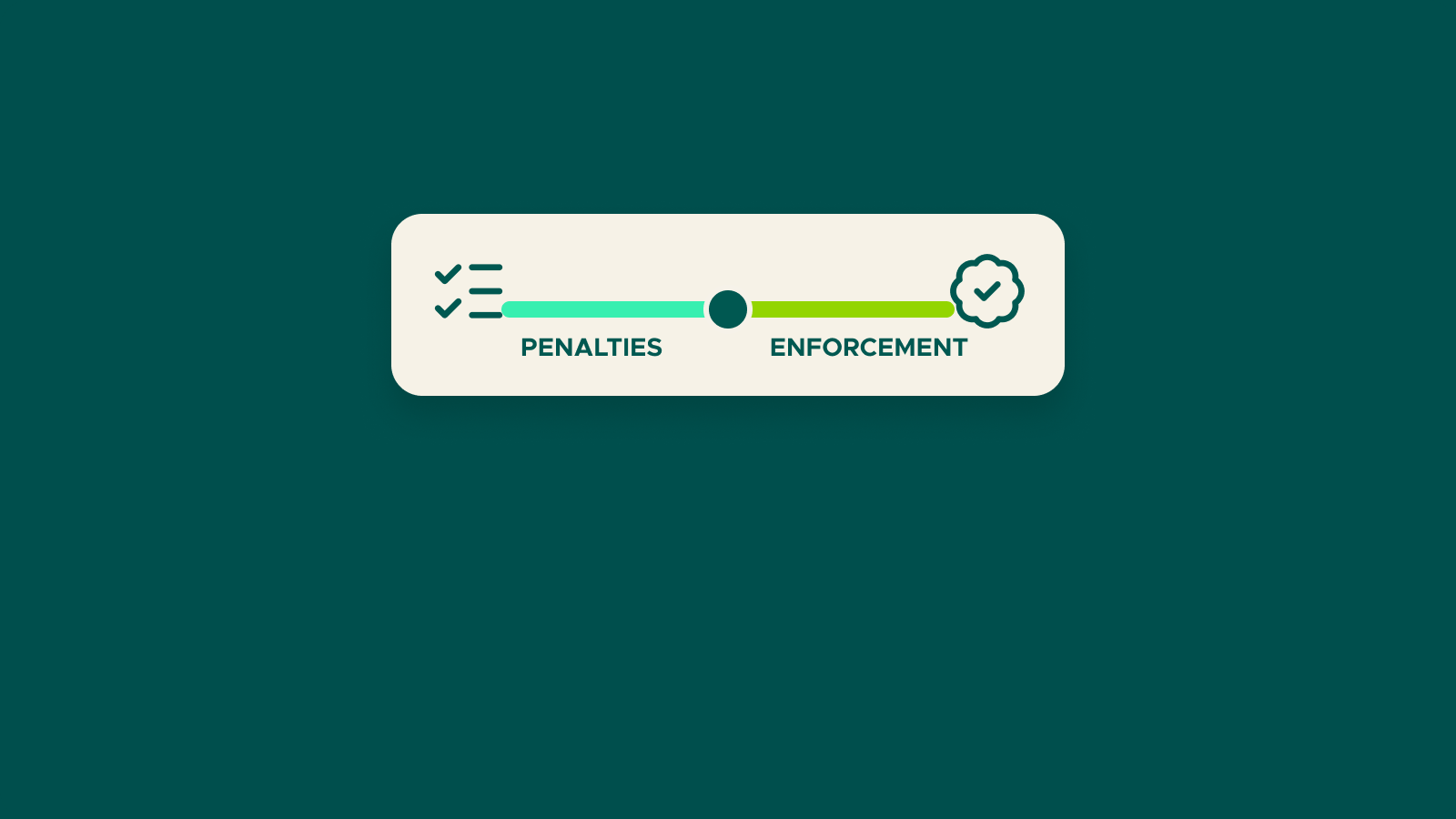
CBAM enforcement is not a single fine. Three distinct layers address three different behaviours.
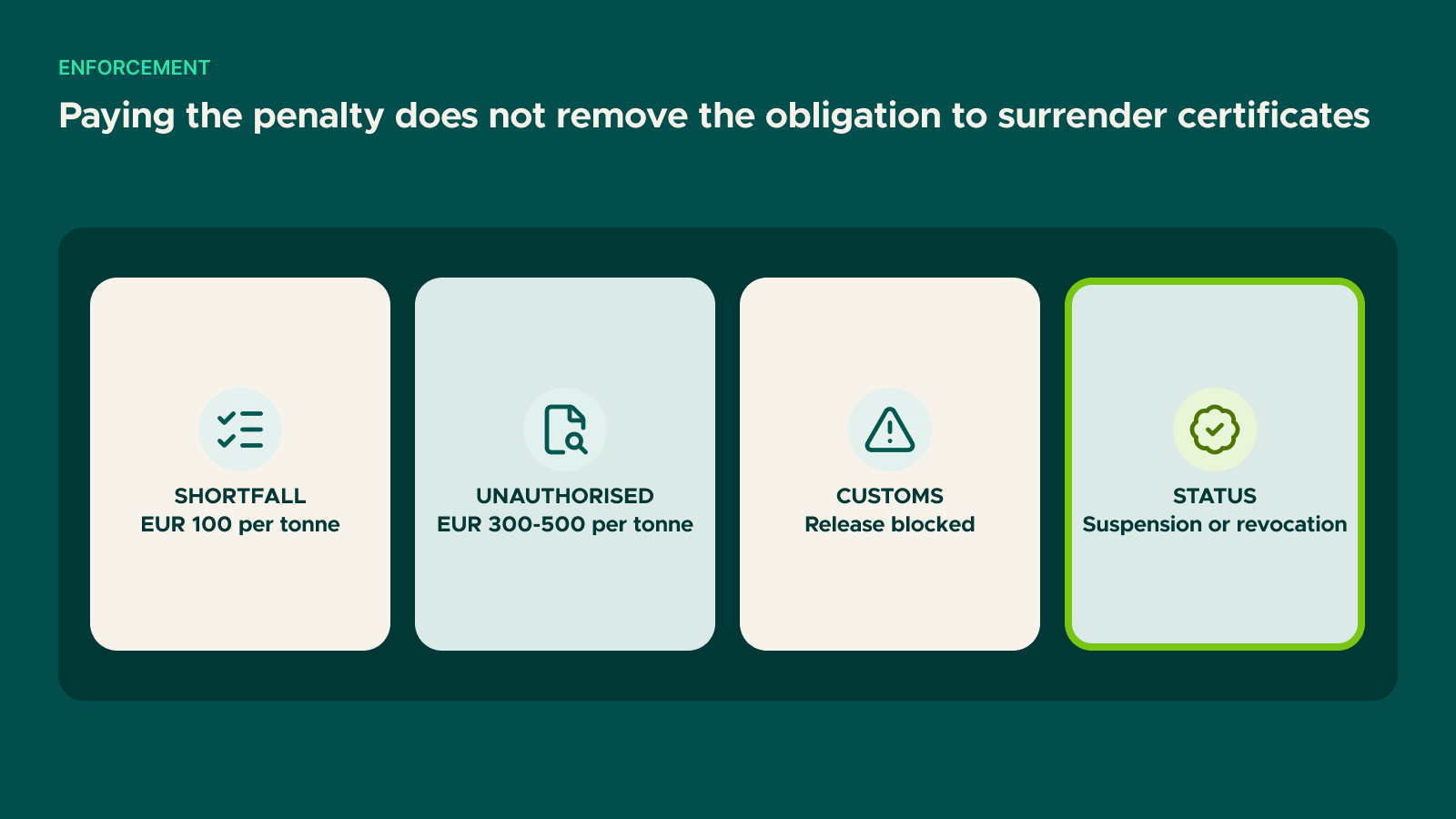
Where the certificates surrendered fall short of the declared embedded emissions — or are not surrendered at all — a penalty of €100 applies for each tonne of CO2 equivalent missing. The amount is indexed annually to EU inflation.
The essential feature of this penalty is that paying it does not extinguish the surrender obligation. It is not an alternative payment route; the outstanding certificates must still be surrendered. With certificates priced around €75, the combined exposure exceeds twice the underlying liability.
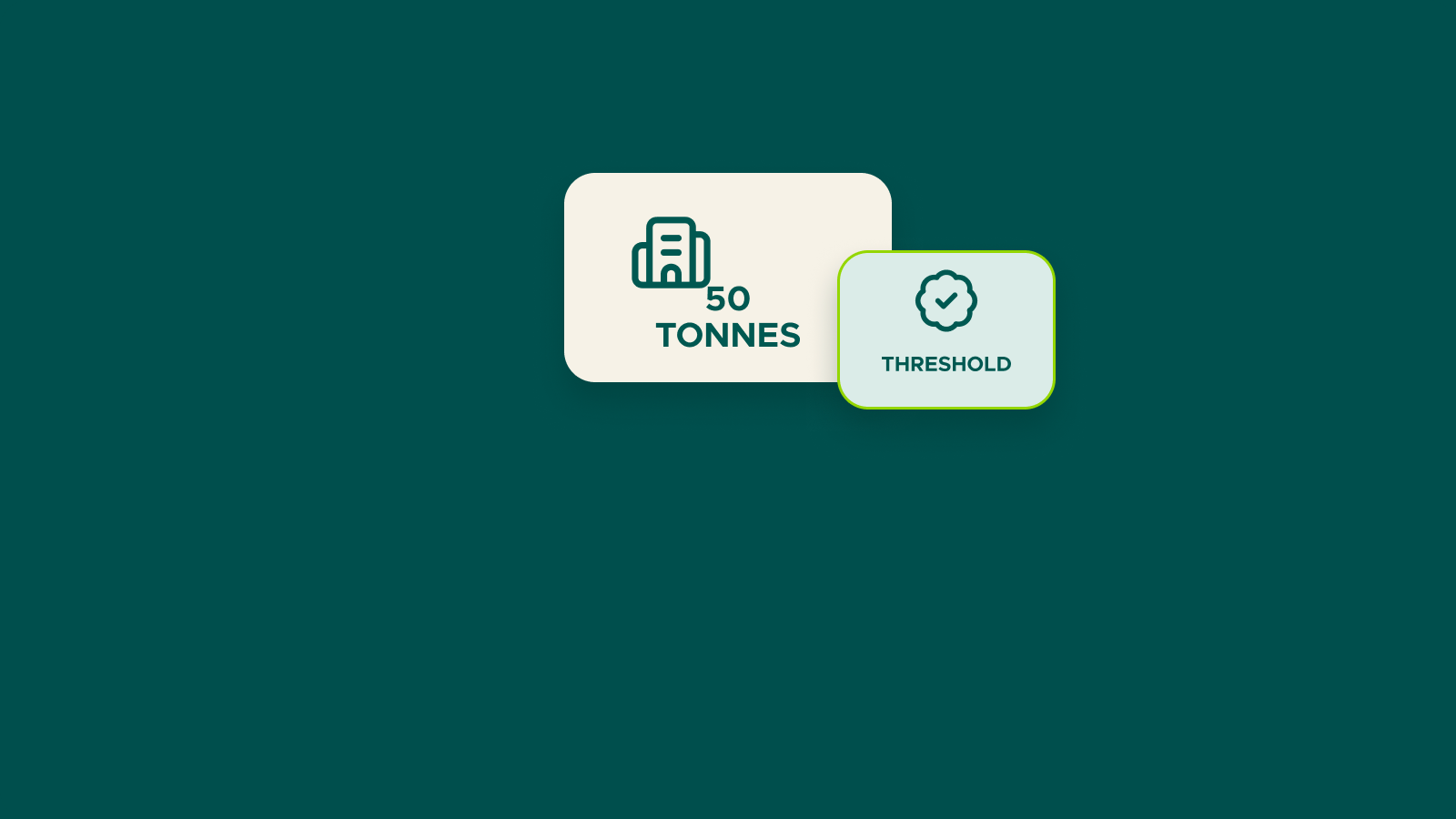
Companies that exceed the cumulative 50-tonne threshold without holding authorised CBAM declarant status face a substantially heavier penalty: €300 to €500 per tonne of embedded emissions, three to five times the standard rate.
The gap is deliberate. A certificate shortfall is a calculable non-compliance that can be made good. Importing without authorisation bypasses the control gate of the system entirely, and the Regulation prices it to deter.
Beyond monetary penalties there are two administrative consequences. Goods belonging to an importer without declarant status cannot be released for free circulation — a check performed automatically, since customs systems and the CBAM Registry are integrated. And a competent authority can suspend or revoke the status where obligations are not met, which affects all subsequent imports.
Get in touch
If something you've read here connects to a live project, a reporting deadline, or a decision you're weighing — we're happy to have a useful conversation.
Contact us
Regulation & Compliance
Regulation & Compliance
Regulation & Compliance
Lets talk about your sustainability goals.
The most immediate consequence. If the buyer's status is missing or suspended, the consignment cannot clear. Where the incoterm is DDP, storage, demurrage and delay costs fall on the seller. Confirming the customer's authorisation status has become a standard commercial check. We cover the status in authorised CBAM declarant status.
The importer bases its declaration on emissions data received from the producer. If the data is wrong, the penalty falls on the importer, but a recourse claim against the producer follows where the error originated upstream. The Regulation does not allocate that liability; it is left to the contract. Limiting liability to verified data, and setting out its scope in writing, therefore matters. We cover the contractual side in supplier data collection.
An importer that has experienced non-compliance traced to its supply base tends to change suppliers. Suppliers that cannot provide data, or provide it late, are removed from portfolios on penalty-risk grounds.
| Scenario | Consequence | Mitigation |
|---|---|---|
| Verification report not ready by the declaration date | Actual values unusable; default values apply | Contract the verifier early; secure a site visit slot |
| Precursor data not received from supplier | Default value plus mark-up for that precursor | Data clause in supply contracts |
| Buyer has not applied for authorisation | Consignment held at the border | Confirm status before accepting the order |
| Different figures sent to different customers | Finding at verification or audit | Share from a single source via the CBAM Registry |
| Prior-year data reused | Declaration invalid | Separate calculation and verification per period |
In some compliance regimes a penalty becomes an alternative to compliance: pay and move on. That calculation does not hold under CBAM, because:
The cost of non-compliance under CBAM is therefore not a predictable fine but an interruption of trade.
No. Enforcement applies to the declarant established in the EU. Risk reaches producers through commercial and contractual channels.
It is indexed annually to the EU inflation rate.
Failure to submit a declaration and shortfalls in surrender are both subject to sanction, and competent authorities can apply administrative measures.
Certificate-related penalties do not arise in 2026, since surrender begins in 2027. Exposure to the unauthorised-import penalty applies throughout 2026.
We work on assessing compliance risk across EU customer portfolios and preparing emissions data on time, under our CBAM accounting and reporting service. You can contact us with your questions.