Blog
Publish: 17 Sep 26Reading Time: 4 Min
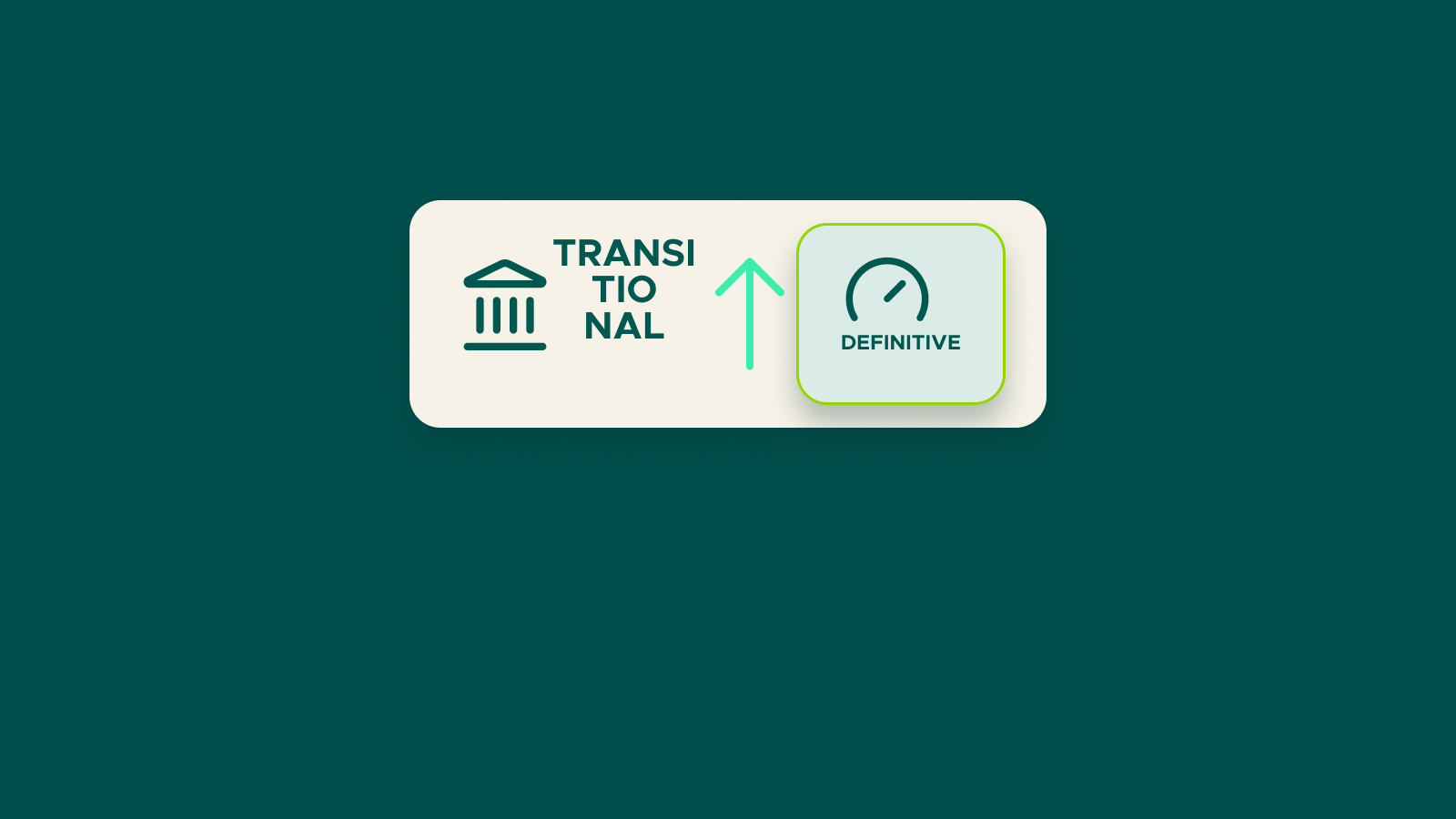
During the transitional period a CBAM request to a supplier usually ended with a spreadsheet and a few emails. Under the definitive regime the nature of the request has changed: the data must be verified, it is refreshed periodically, and because it forms the tax base of the importer's own liability it needs contractual backing. This article sets out what the declarant actually needs and which points should be in writing.
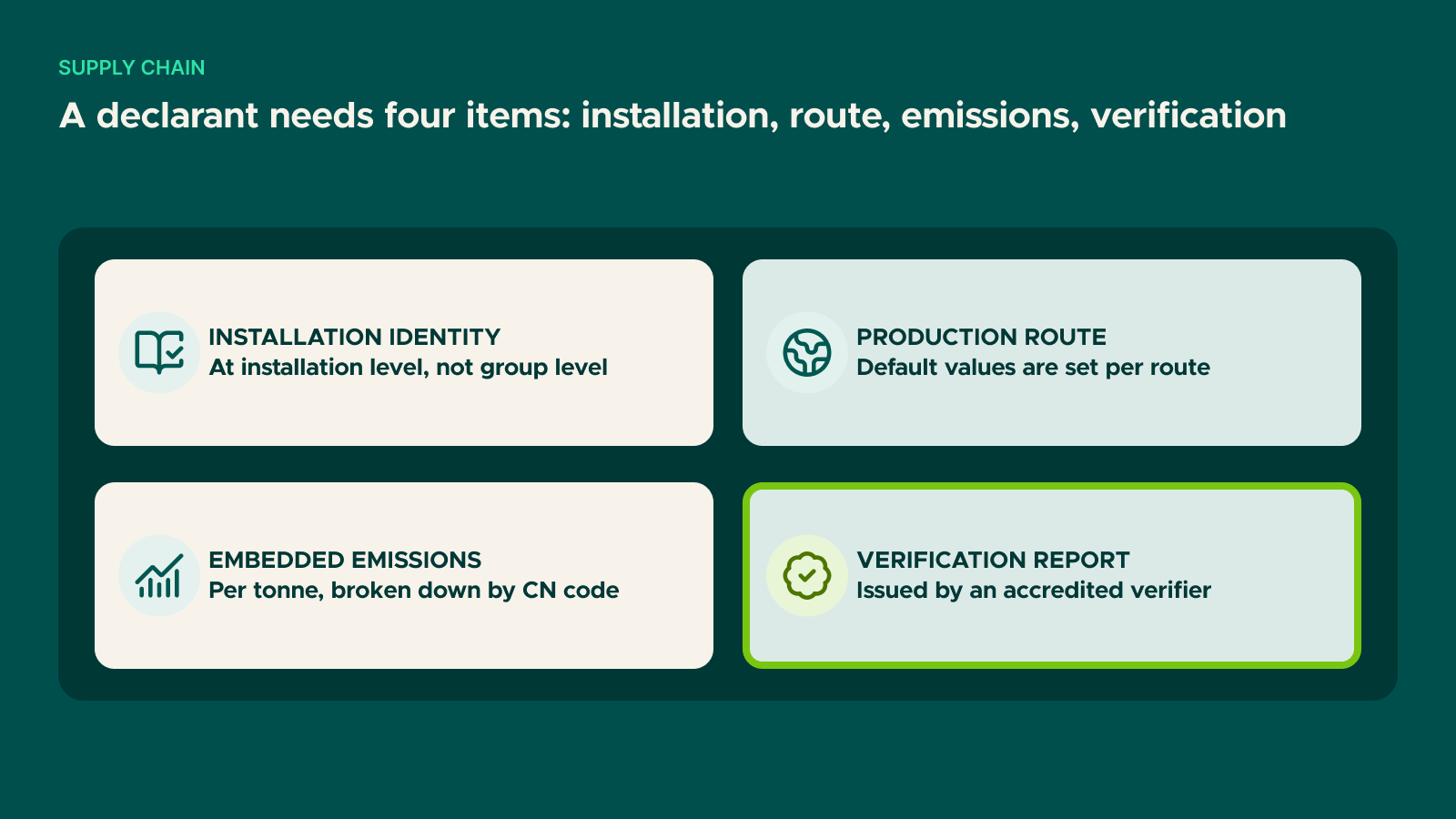
An EU importer must report four things in its annual CBAM declaration: quantity imported, embedded emissions, the verification report and the certificates surrendered. The first comes from its own records; the other two come from the supplier.
A well-formed request covers:
This dataset does not have to be sent to each customer separately. The CBAM Registry's third-country operator module allows it to be entered once and released to several declarants — see the CBAM Registry and O3CI portal.
The calendar sets the rhythm. The declaration for 2026 imports falls due on 30 September 2027, and verification reports are expected from January 2027, so the substantive request for 2026 data concentrates in the first half of 2027.
From 2027 a second rhythm begins. Declarants must hold at least 50% of the certificates matching year-to-date imports at the end of each quarter, which means they need an emissions figure during the year, not only after verification.
In practice the flow therefore consists of one verified annual report plus periodic in-year estimates. Keeping the two clearly separated — and labelling provisional figures as provisional — avoids the commercial friction that arises when a final verified figure diverges from an unlabelled estimate.
Which data items, in what format, by when. Whether delivery is through the CBAM Registry or directly.
The Regulation does not assign verification cost. Because verification happens once at installation level and the same report serves every customer, producers commonly bear it — but this should be stated. Where a customer requests verification specific to it, cost sharing needs separate treatment.
A summary report can be produced for commercially sensitive information; the verifier sees the full dataset while what reaches the customer can be a summary. What is disclosed, and whether it may be passed to third parties, should be written down.
Sanctions for misstatement fall on the importer. Where the data originated with the producer, how liability is shared is left to the contract. Limiting liability to verified data is a reasonable starting position for a supplier.
A representation that the buyer holds authorised CBAM declarant status, or has applied. Without it goods do not clear, and under DDP terms that risk sits with the seller.
Because the free allocation factor declines annually, CBAM cost is a rising line in multi-year contracts. Whether the price revision mechanism captures that variable should be settled at the outset.
Most producers experience the CBAM data request as administrative burden. The structure of the request, however, creates a differentiation opportunity for low-emission producers.
When a buyer compares two offers, CBAM cost enters its own accounts directly. A supplier with lower emissions intensity that can evidence it reduces the buyer's total cost. A supplier without data is represented by a country default value plus mark-up — so its own good performance is simply not visible.
Data preparation is therefore as much commercial positioning as compliance. We quantify the gap in default values and country mark-ups.
Most likely because it sits below the annual 50-tonne threshold and is outside the mechanism entirely.
For the same installation and period the figure must be the same. Divergent figures create serious questions at verification and audit.
Emissions data originates at the production installation; an intermediary can neither generate nor transfer it.
There is no obligation to supply it, and the buyer can declare on default values. Because that raises the buyer's cost, it feeds into price negotiation and supplier selection.
We work on making supplier data requests answerable and preparing verified emissions data, under our CBAM accounting and reporting service. You can contact us with your questions.
Get in touch
If something you've read here connects to a live project, a reporting deadline, or a decision you're weighing — we're happy to have a useful conversation.
Contact us
Regulation & Compliance
Regulation & Compliance
Regulation & Compliance
Lets talk about your sustainability goals.