Blog
Publish: 17 Sep 26Reading Time: 4 Min
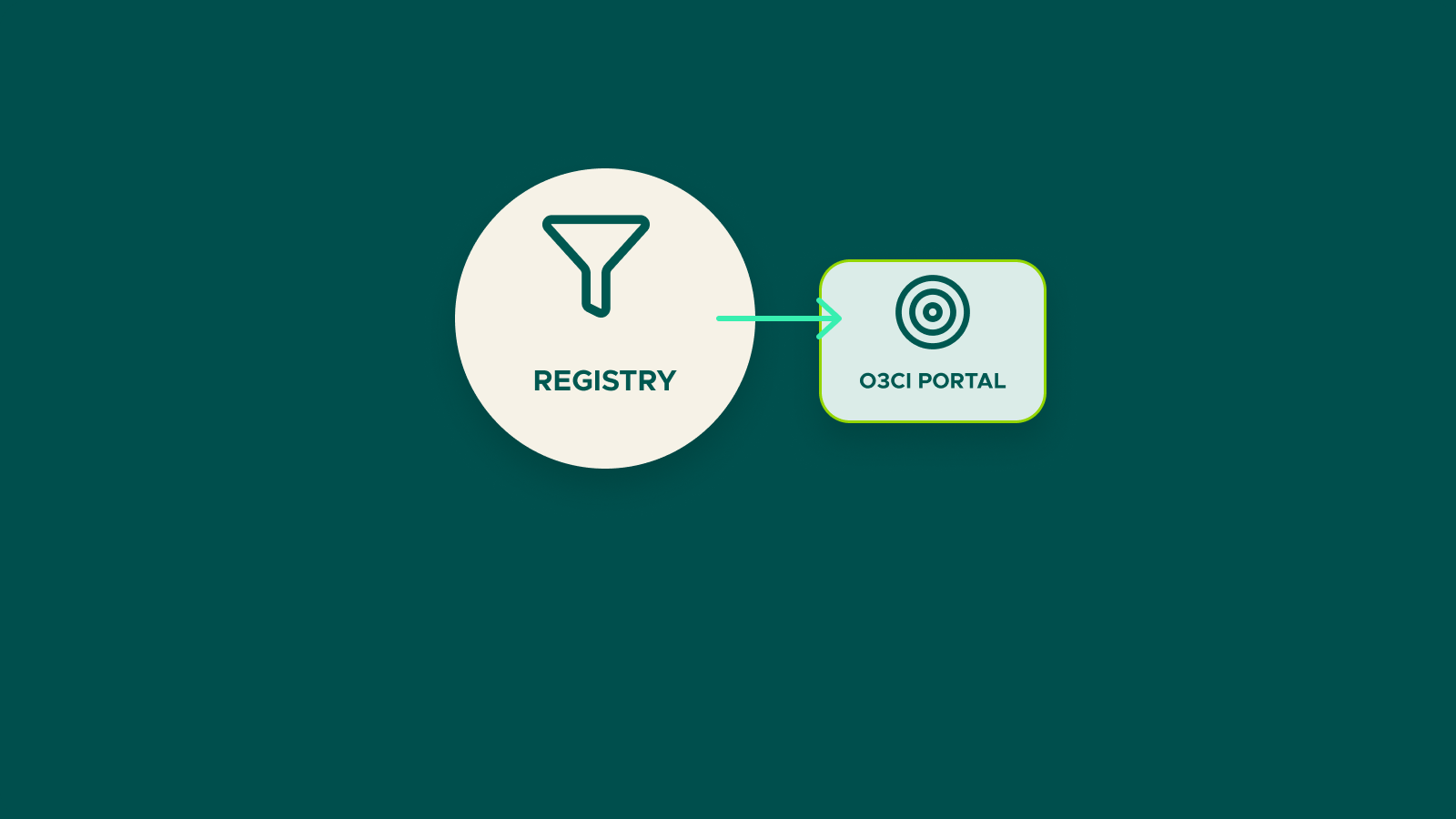
The CBAM Registry brings the mechanism's four parties onto one platform: authorised declarants, third-country installation operators, accredited verifiers, and member state competent authorities. For a non-EU producer the relevant part is the operator module, which allows installation and emissions data to be entered once and made available to multiple EU customers.
The CBAM Registry is the operating infrastructure of the mechanism and runs alongside the EU's other customs systems. It serves four user groups:
Data flows between customs administrations and the Commission run through the same infrastructure, so a consignment's customs status and a declarant's authorisation status are matched automatically.
The most common practical complaint of the transitional period was repetition. A steel producer selling to ten EU customers filled in ten templates, often in ten formats with ten different question sets. Consistency was difficult to maintain and commercially sensitive information circulated more widely than necessary.
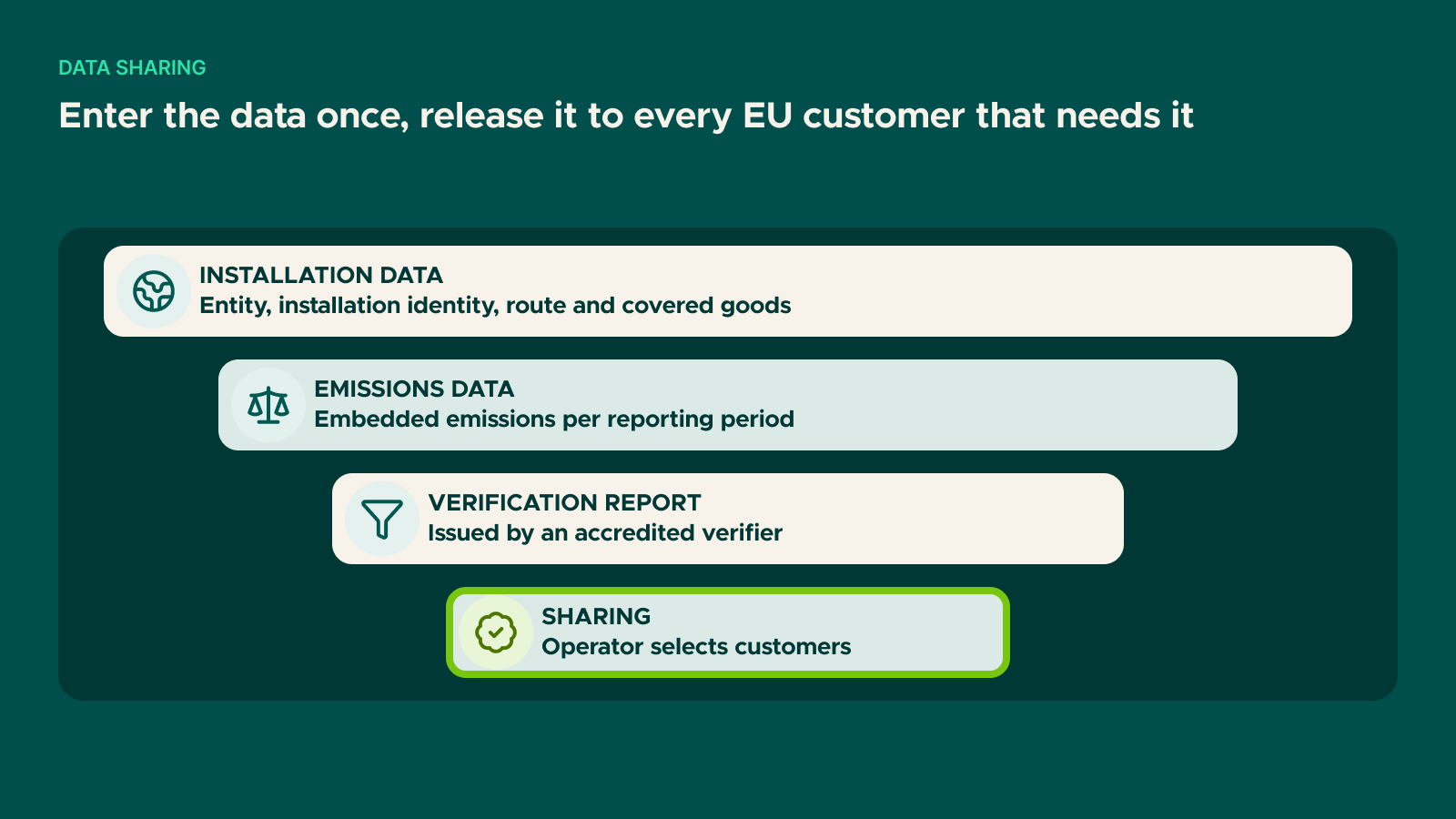
The O3CI module — the portal for operators of third-country installations — centralises this. The operator enters company and installation details, production route, annual emissions data and the verification report once, then decides which EU customers may access it. Declarants can then populate their declarations directly from that data.
Two benefits follow. Administrative burden falls. More importantly, the data has a single source, which removes the risk of inconsistency — two customers holding different figures for the same installation and period is a serious problem at verification.
Get in touch
If something you've read here connects to a live project, a reporting deadline, or a decision you're weighing — we're happy to have a useful conversation.
Contact us
Regulation & Compliance
Regulation & Compliance
Regulation & Compliance
Lets talk about your sustainability goals.
Access runs through the EU's central authentication infrastructure, so registration is less a technical exercise than a documentation one. The points to settle before registering:
The Commission published a detailed manual for the installation operator and accredited verifier portal on 27 August 2026, covering screen flows and field definitions.
The sharing model gives control to the producer: the operator decides who sees the data. That raises two questions.
The first is how much to disclose to whom. The rules allow a summary report for commercially sensitive information — the verifier sees the full dataset while what reaches the customer can be a summary. This distinction should be settled before registering.
The second is that the data becomes a commercial instrument. For an installation performing below the country average, the portal is the most direct way to make that visible. Installations that share nothing are represented by the country default value plus mark-up — so not appearing in the portal means accepting a marked-up country average in place of your own performance.
Registration is not mandatory today; a producer can still send data directly to its customer. The Commission's anti-circumvention proposals, however, include a requirement that third-country operators register in the CBAM Registry in order for actual emissions data to be used. The same proposals would allow additional conditions on actual emissions claims, additional evidence on the installation and date of production, and a standard CBAM declaration format.
The direction of travel suggests registration will become a de facto precondition. We cover the proposals in CBAM anti-circumvention rules.
The portal is also where verification is recorded. Verifiers began registering on 1 September 2026, and the first verification reports are expected in January 2027. Because the operator's data and the verifier's report are matched in the system, the sequence matters: emissions data uploaded before verification is complete remains unfinished. We cover the process in CBAM verification and accredited verifiers.
No fee is foreseen for portal registration. The cost sits in the emissions calculation and verification that fill it.
Data can still be sent directly. With several customers, the portal is the safer route for consistency.
Sharing permission rests with the operator, and a summary report can be produced for sensitive information. The full dataset is seen by the verifier and competent authorities.
The operator of the installation where the goods were produced. An intermediary cannot be the source of emissions data.
We work on preparing installation and emissions data for the portal and defining the scope of what is shared, under our CBAM accounting and reporting service. You can contact us with your questions.