Blog
Publish: 17 Sep 26Reading Time: 5 Min
Using actual emissions data under the definitive regime has exactly one condition: the data must be verified by an accredited verifier. Verification is not a confirmation of the declared figure; it is an audit of the system that produced it. Preparation therefore starts long before the calculation is finished and involves several functions across the company.
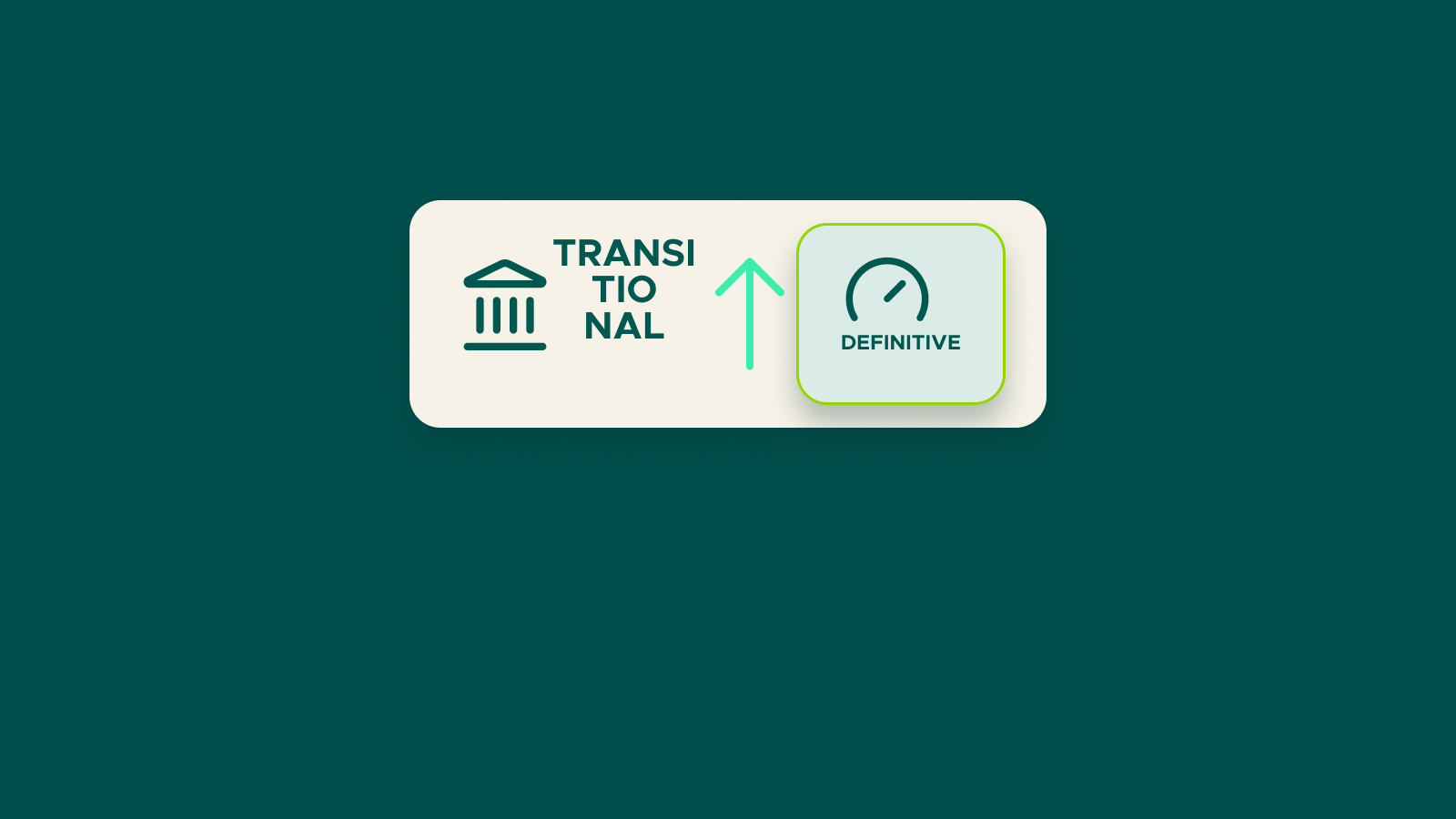
Transitional-period emissions data was not verified. Under the definitive regime the same data forms the tax base of a financial obligation, so independent assurance became mandatory. The logic mirrors the principle that a tax base is independently audited.
The verifier applies a risk-based approach and must form an opinion providing reasonable assurance that total emissions are not materially misstated and that the report can be verified as satisfactory. This is assurance against material error rather than absolute accuracy — but what counts as material is determined by the verifier's risk assessment, and that assessment reflects the quality of the installation's data. Where data infrastructure is weak, risk is assessed as high, sampling expands and the process takes longer.
CBAM verification cannot be performed by any independent body. The verifier must be accredited under CBAM by an EU national accreditation body. Delegated Regulation (EU) 2025/2551, published in November 2025, sets the conditions for granting accreditation, the control and oversight of accredited verifiers, withdrawal of accreditation, and mutual recognition and peer evaluation between accreditation bodies.
Two features ease the position of verifiers established outside the EU. An application to a single EU accreditation body is sufficient; separate accreditation in each member state is not required. And existing verification capability under the EU ETS, ISO 17029 and ISO 14065 is taken into account in the accreditation assessment.
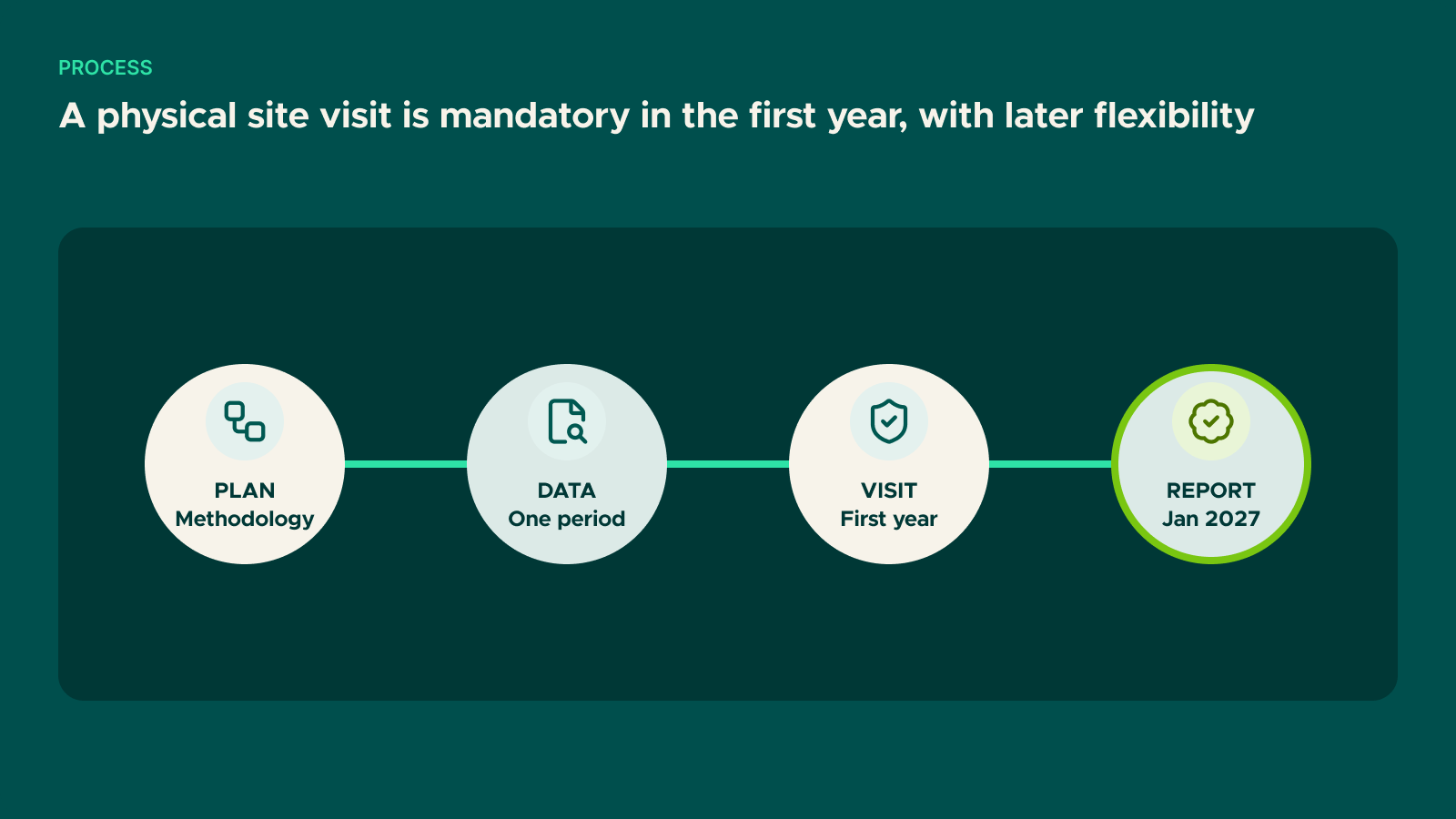
Accreditation bodies that have indicated they accept third-country applications include Accredia (Italy), RvA (the Netherlands), SWEDAC (Sweden) and PCA (Poland). The first CBAM accreditations were expected around September 2026; verifier registration in the CBAM Registry opened on 1 September 2026, and the first verification reports are expected in January 2027.
A frequent source of confusion is the assumption that a verifier holding national accreditation in the country of production can perform CBAM verification. Current rules require accreditation from an EU national accreditation body.
The recognition of third-country accreditation is an active policy question. The Commission's revision proposals include the possibility of agreements on mutual recognition of third-country accreditation bodies, and exporting countries — Türkiye's Ministry of Trade among them — have raised recognition of their national accreditation body as a priority. Until such an agreement exists, the practical requirement when selecting a verifier is to confirm which accreditation it holds. Holding ISO 14064 verification accreditation does not imply CBAM competence.
Verification is not a desk exercise. A physical site visit is mandatory in the first year. Flexibilities apply subsequently — virtual visits or exemptions in defined circumstances — with an expectation of a physical visit at least every two years. For electricity emissions, a single site visit covering five reporting periods is accepted.
Site visit scheduling is the most frequently underestimated item in the calendar. Verification of 2026 data will concentrate in the first half of 2027, and the number of accredited verifiers will be limited. Contracting early is how a visit date gets into the calendar at all.
Where a carbon price paid in the country of production is to be deducted, the emissions report verifier must also verify that amount — so the verification scope is not limited to emissions. We cover the deduction in carbon price paid in a third country.
Step four is often left late and proves expensive. Obtaining the verifier's view on methodological choices at the start of the period, rather than at the end, removes the risk that a year's data turns out to be unusable. The calculation build is covered in calculating CBAM embedded emissions.
Yes, each reporting period requires its own verification. Site visit frequency is where the flexibility sits.
Only if it holds CBAM accreditation from an EU accreditation body. Existing ISO capability supports an accreditation application but does not substitute for it.
No. Default values are not subject to verification, which removes the verification cost at the price of the mark-up.
Actual values cannot be used, and the goods revert to default values with the mark-up applied.
We work on preparing the monitoring methodology, establishing data traceability and readying installations for verification, under our CBAM accounting and reporting service. You can contact us with your questions.
Get in touch
If something you've read here connects to a live project, a reporting deadline, or a decision you're weighing — we're happy to have a useful conversation.
Contact us
Regulation & Compliance
Regulation & Compliance
Regulation & Compliance
Lets talk about your sustainability goals.